- August 19, 2026
- Dennis
- 0
I have several questions.
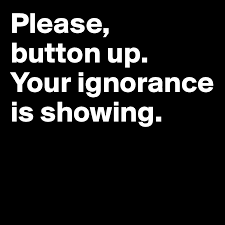
Actually, I had several questions. Then I started writing them down and somehow ended up with a spreadsheet. This is apparently what happens when you spend too much time observing humanity.
So, let’s begin.
Why does someone else’s abortion bother you so much?
Why does a transgender person living their life bother you?
Why does someone being gay bother you?
Why does someone practicing a different religion bother you?
Why does a married gay couple somehow become your personal emergency?
Why does seeing homeless people bother you?
Why do cities bother you?
Why do bicycles bother you?
Why does actually following the United States Constitution bother you?
Why does acknowledging that America was not founded as a Christian nation bother you?
And why, after seeing homeless people bother you the first time, does seeing them again apparently require a sequel?
These aren’t hypothetical questions. I’ve heard versions of them in conversations with strangers, acquaintances and family members.
And here’s my incredibly radical proposal:
Stop making other people’s personal lives your hobby.
If someone is making a deeply personal decision involving their own body, family and doctor, perhaps that decision does not require your approval stamp.
If someone is gay, let them be gay.
If someone is transgender, let them live their life.
If someone worships differently than you do, perhaps God can handle the customer service issue without your assistance.
You are free to disagree. That’s part of freedom.
The important distinction is that your freedom does not require everyone else to live exactly as you do.
That’s kind of the whole point.
The Homeless Problem
Now, homelessness is different.
If seeing homeless Americans bothers you, good. It should.
But moving them somewhere you don’t have to look at them isn’t solving homelessness. It’s moving the problem out of your field of vision and congratulating yourself for improving society.
That’s not public policy. That’s interior decorating.
Homelessness involves housing, addiction, mental health, employment, poverty, abuse, trafficking and a whole collection of interconnected problems. We should be trying to solve those problems and help people rebuild their lives.
Because the person sitting on that sidewalk is still a human being.
And someday, through circumstances you never imagined, it could be you or someone you love.
So perhaps compassion isn’t weakness. Perhaps it’s simply remembering that we’re all one bad chapter away from needing someone else’s help.
And Then There Are Bicycles
Apparently, bicycles have become a culture war too.
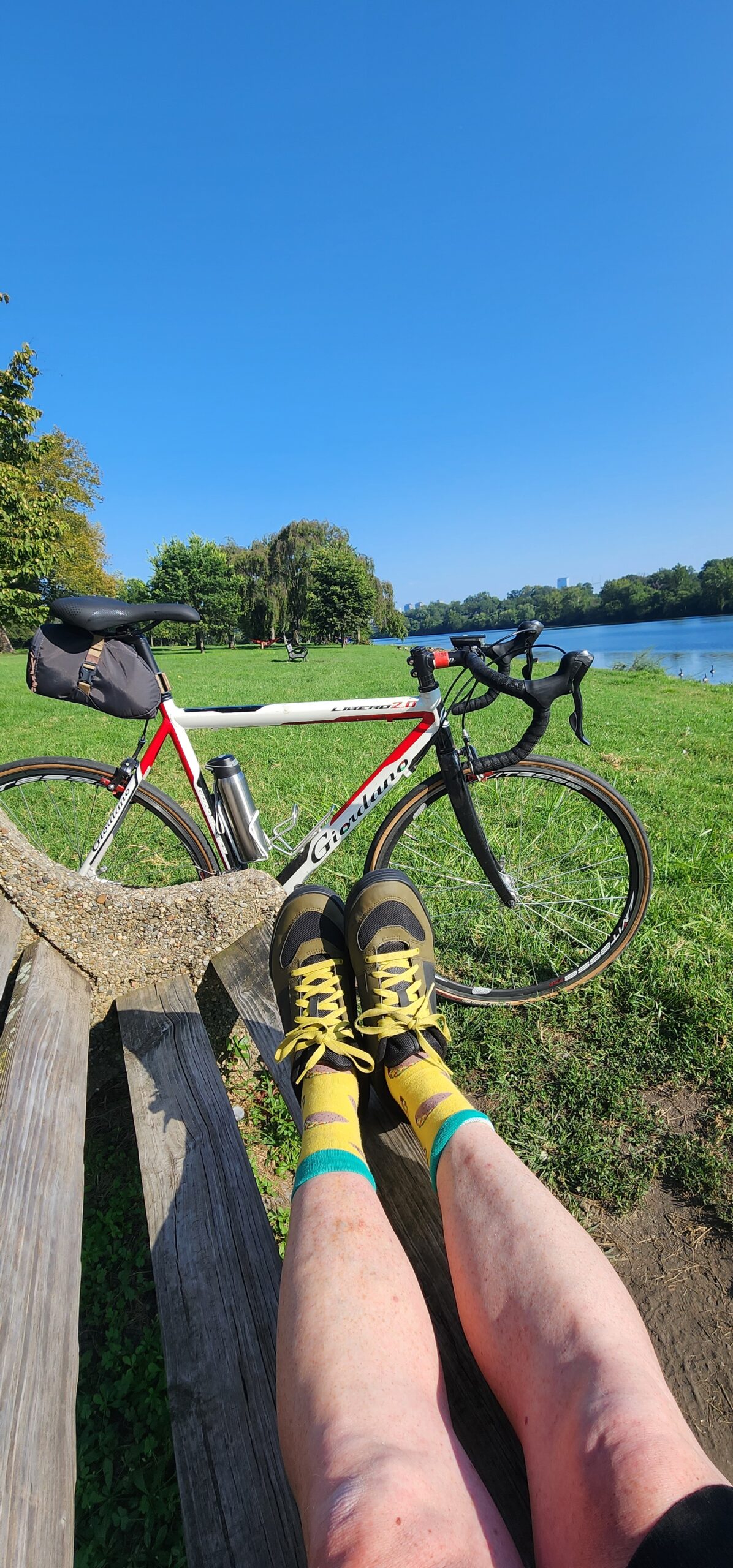
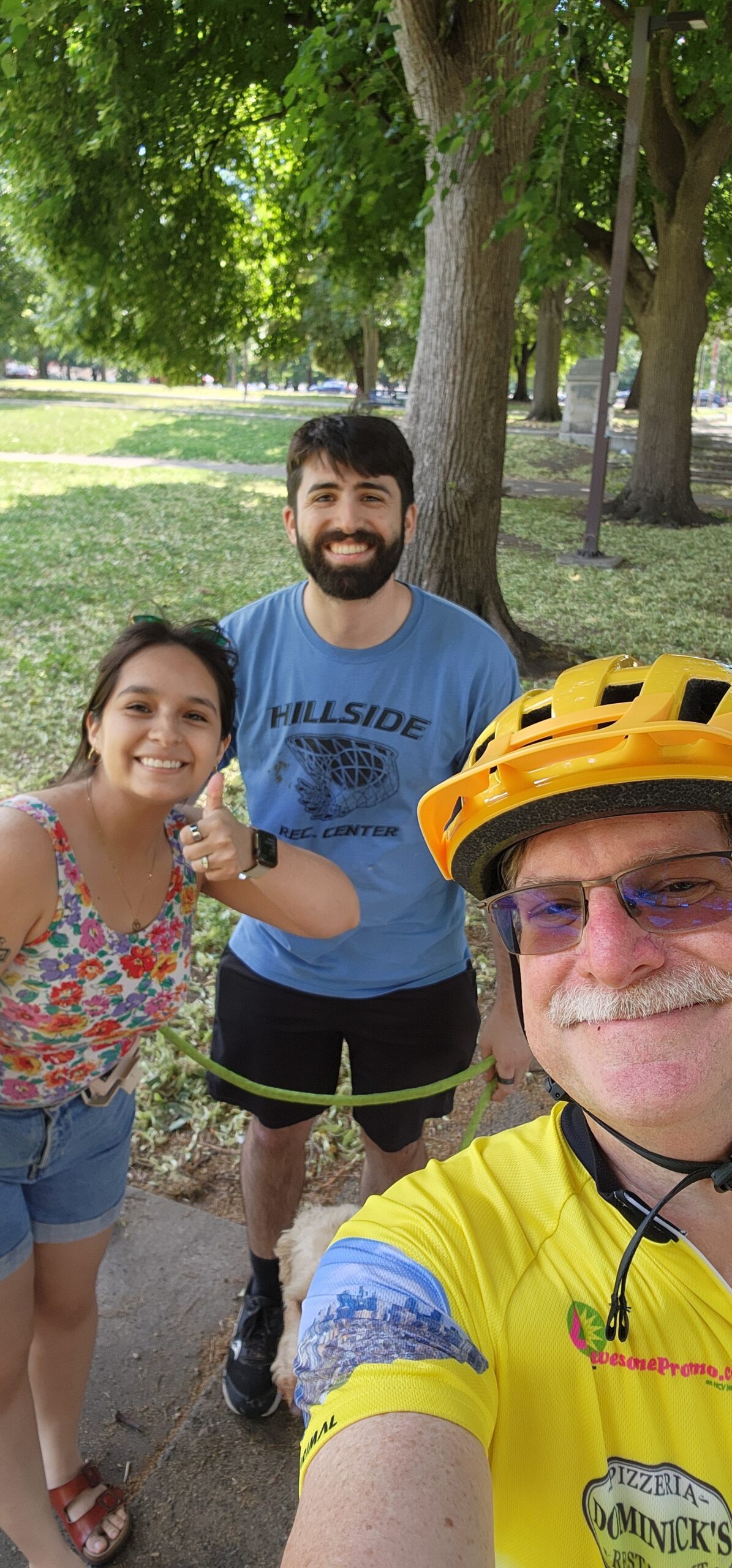
I’m a cyclist, so naturally I have opinions.
Do bicycles bother you because they remind you that your cardiovascular system currently considers walking to the mailbox an extreme sport?
Do they bother you because they occupy road space?
Do they bother you because you believe everyone on a bicycle ignores traffic laws?
Fair enough. Some do.
So do some drivers.
Speeding? Check.
Changing lanes without signaling? Check.
Following too closely? Check.
Driving distracted? Check.
Turning headlights on only when the weather has become biblical? Check.
And my personal favorite: driving slowly in the left lane while creating a parade behind you.
Cyclists are required to follow applicable traffic laws too. I ride, and I make every effort to follow them.
So maybe we could all stop treating transportation choices like declarations of war.
It’s a bicycle.
Not an invasion fleet.
The Constitution Thing
This is where I really get confused.
I’ve lost count of how many people loudly proclaim their love for the Constitution while simultaneously explaining which parts they think certain Americans shouldn’t get to enjoy.
That’s an interesting interpretation of constitutional government.
It’s like saying, “I love the rules, provided we can edit them whenever they inconvenience me.”
The United States was deliberately designed to avoid establishing a single national religion. The First Amendment protects religious exercise while preventing government establishment of religion.
That doesn’t make America anti-Christian.
It makes America religiously free.
There’s an important difference.
Our founders had firsthand experience with what happens when government and religious authority become too tightly intertwined. The goal was not to create a government that told everyone what to believe. It was to create one that left room for people to believe.
That freedom includes people who disagree with you.
Yes, even them.
Especially them.
The Fantasy of Everyone Being the Same
Maybe what some people actually want isn’t freedom.
Maybe they want predictability.
Everyone believes the same things.
Everyone practices the same religion.
Everyone listens to the same music.
Everyone votes the same way.
Everyone dresses the same.
Everyone thinks the same.
Everyone stays nicely inside the approved little box.
Congratulations.
You’ve invented a dystopia with excellent branding.
The problem is that somebody has to decide what “approved” means.
And once you give the government that authority, you had better hope you remain friends with whoever is holding the clipboard.
Because political power changes hands.
The group writing the rules today may be the group complaining about those rules tomorrow.
That’s why constitutional limits matter.
That’s why individual liberty matters.
That’s why freedom of religion matters.
That’s why freedom of speech matters.
That’s why freedom to live differently matters.
America Was Never Supposed to Be an HOA
The United States was created as an experiment in self-government, individual liberty and constitutional limits on governmental power.
It was never supposed to be a giant national homeowners association where a committee decides what religion you’re allowed to practice, whom you’re allowed to love, what you’re allowed to think and which version of “American” you’re permitted to be.
And here’s the funny part:
You don’t have to like everyone to defend their freedom.
That’s the part people seem to keep missing.
You can think someone’s lifestyle is completely wrong and still defend their right to live it.
You can disagree with someone’s religion and still defend their right to practice it.
You can dislike someone’s politics and still defend their right to express them.
You can hate bicycles with the burning intensity normally reserved for tax season and still accept that cyclists have rights.
That’s freedom.
It isn’t always comfortable.
It isn’t always convenient.
And occasionally, it will involve people doing things that make you stare into the middle distance and question the entire species.
Welcome to America.
The alternative is a country where someone else gets to decide what you’re allowed to believe, say, worship, love and do.
And eventually, someone else gets to decide that you are the one who doesn’t belong.
So perhaps the better question isn’t:
“Why does this person bother me?”
Maybe it’s:
“Why do I believe I should have the power to control this person?”
That’s a much harder question.
And perhaps that’s exactly why we should be asking it.
Because freedom isn’t about creating a country where everyone agrees with you.
It’s about creating a country where you don’t need everyone to agree with you in order for them to be free.
Which, frankly, seems like a pretty decent idea for America to try again.